
Riley Davis
ผู้เยี่ยมชม
riley.davis34@yahoo.com
How a VPN Can Add Privacy to Your Internet Connection (3 อ่าน)
10 ก.ย. 2569 14:45
Selecting a VPN is seldom as straightforward as picking the provider with the most affordable stated cost. Two services can offer akin speed ratings and node quantities while delivering varied experiences when it relates to privacy controls, streaming capability, hardware support, and regular reliability. The more effective approach is to evaluate what each service actually delivers for your individual needs rather than considering every VPN as interchangeable.
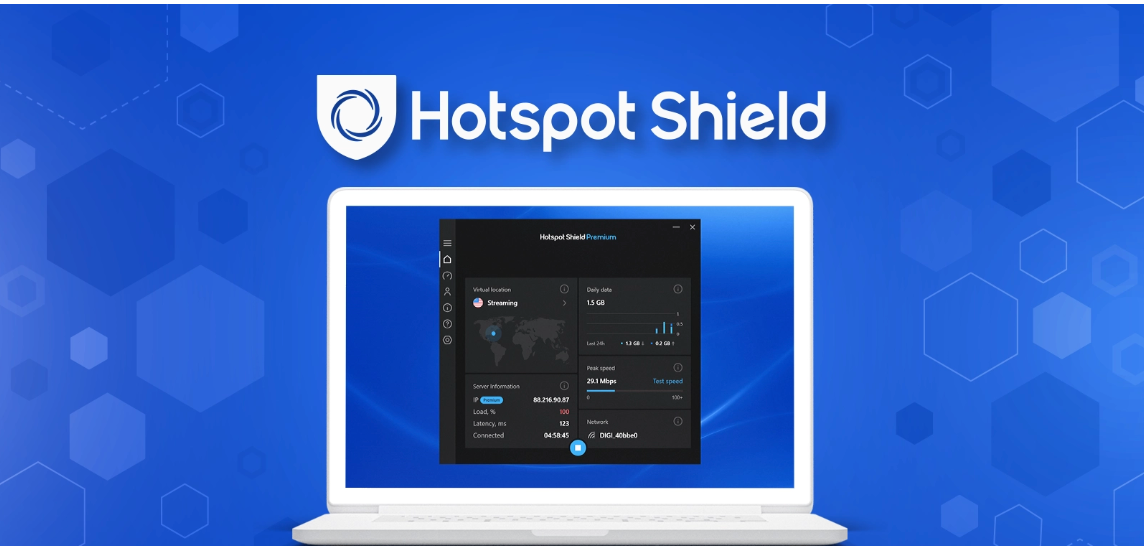
That is the place where a comparison-oriented site such as VPNlikeAlternatives can be useful. Instead beginning with a one VPN and presuming it is the best choice, users can examine alternatives and consider the tangible differences between competing VPN services. A meticulous comparison can assist someone to steer clear of paying for features they will never utilize while also preventing a cheap subscription from becoming annoying after the early period.
Which Matters Greatly During Comparing VPN Providers?
A VPN forms an secure connection between your device and a VPN server, enabling protect traffic from particular types of eavesdropping and hiding your IP address from sites and online services. That core function is important, but it is only a single elements of evaluating a provider.
Privacy policies deserve close attention. A provider may claim robust privacy protections, but users should seek clear information about what data is gathered, how longly it is retained, and when information may be shared. A concise policy is more straightforward to evaluate than broad marketing language that poses important questions unaddressed.
Safety features also differ. Depending on the provider, users may encounter options such as up‐to‐date VPN protocols, a kill switch, DNS leak protection, split tunneling, or instant connection protection on unfamiliar networks. No single person needs every feature. Someone who mainly uses a VPN on public Wi‐Fi may value automatic protection, while another user may care more about flexible device connections.
Connection speed Is More Than a Promotional Claim
Speed performance is among the most noticeable distinctions between VPN services. Encryption and routing traffic through a remote server can introduce some overhead, although the impact relies largely on the user's connection, preferred server, protocol, distance, and network conditions.
A helpful comparison therefore considers stability rather than emphasizing a single spectacular speed assertion. A server that performs well during one test may feel quite different during a busy evening. Users who view video, participate in video calls, download large files, or game online should consider latency and stability as well as raw download speed.
Server location matters too. Using a remote server can add latency. For normal browsing, that delay may be hardly perceptible. For tasks that demand rapid responses, such as competitive gaming or interactive apps, it can become far more essential.
VPNs for Streaming and Everyday Browsing
Streaming capability is an additional reason people search for VPN alternatives. Some users want to use services while travelling, while others simply want an additional layer of privacy when utilizing their regular internet connection. However, streaming platforms often alter their methods for detecting VPN traffic, so no provider can reasonably guarantee permanent access to every service or region.
For streaming, the actual experience often relies on whether the provider maintains appropriate servers, handles changing platform restrictions effectively, and provides enough server locations for the user's travel or viewing needs. A service that operates smoothly for one platform may behave differently with another.
For standard browsing, the priorities are usually varied. Consistent connections, rapid server switching, easy‐to‐use applications, and steady reconnection can outweigh specialized streaming features. This is a prime example of why the "best VPN" relies on the person using it.
Hardware Compatibility Can Change the Worth of a Subscription
People rarely use just one internet‐connected device anymore. A household may have Windows/Mac computers, smartphones, tablets, smart televisions, and other compatible equipment. Before purchasing a subscription, verify which platforms the provider supports and how simultaneous connections are treated.
A service that works beautifully on a laptop may be less practical if its mobile application misses an essential setting. Similarly, a household plan may appear appealing until users realize that the number of supported simultaneous connections does not fit their needs.
Simplicity should not be trivialized as a small feature. A highly technical VPN is of limited practical value if users find it hard to set up it correctly. Intuitive applications, clear settings, and stable connection controls make privacy tools more convenient to use consistently.
Price Should Be Compared With the Real Features
VPN pricing can be confusing because providers often display different subscription periods, promotional rates, renewal prices, and extra plan features. The most affordable headline price is not necessarily the least long‐term cost.
When comparing providers, see past the introductory offer. Consider what the subscription costs after the promotional period, whether the plan supports the needed number of devices, and whether the features that drawn you to the service are part of that particular tier.
A user who only needs secure browsing on one computer may have no reason to purchase a premium package packed with additional features. Conversely, a family with several devices may find that a moderately more expensive plan offers better practical value.
Why Considering VPN Alternatives Makes Sense
People often remain with the first VPN provider they try simply because changing services feels inconvenient. Yet a comparison can reveal that another provider better matches their current priorities. Internet habits shift, travel patterns shift, and the services people use online shift as well.
For example, someone who initially chose a VPN for public Wi‐Fi protection might later be drawn to streaming, travel, multiple‐device support, or enhanced privacy controls. The provider that was entirely suitable at the beginning may no longer be the best option.
Searching for VPN alternatives is therefore not necessarily about finding a globally superior company. It is about identifying meaningful differences and deciding which ones are important to you. A comparison site can make that process easier by putting relevant considerations in one place instead of compelling users to visit numerous provider websites individually.
What a Practical VPN Comparison Should Reveal You
A useful comparison should enable answer clear questions. How strong are the provider's privacy practices? Which devices and operating systems are covered? How reliable are connections? Does the service offer the locations a user needs? Are useful security controls available? Is the pricing acceptable for the intended use?
The answers should also be viewed in context. Privacy software involves trade‐offs, and a feature that is beneficial for one person may be immaterial to another. A frequent traveller might value a broad selection of locations and steady mobile applications. A remote worker could value stable connections and secure access on new networks. A household may value simultaneous device support.
Making a Better Decision Before You Subscribe
Kick off with your actual reason for wanting a VPN. List the devices you use, the activities you expect to perform, and the locations you may need to connect through. Then assess providers against those requirements rather than against an generic list of specifications.
It is also wise to read the provider's privacy documentation before committing. Search for precise explanations rather than relying exclusively on phrases such as "maximum privacy" or "complete anonymity." A VPN can improve online privacy, but it does not make a user completely anonymous, and it cannot protect against every form of tracking, malware, account compromise, or unsafe online behavior.
Finally, assess how comfortable you are with the software itself. The most valuable privacy tool is one you can operate confidently and keep enabled when appropriate. A complex service that often gets disabled because it is hard to use may provide less practical protection than a more straightforward service that blends with your routine.
Finding a VPN That Matches Your Needs
VPN comparison is ultimately about matching technology with real usage. Security, privacy practices, connection performance, streaming compatibility, device support, usability, and pricing all deserve consideration, but they do not have the same importance for every user. Evaluating alternatives before subscribing gives you a better chance of choosing a service that remains useful beyond the initial promotional period. If you are looking for another place to compare VPN providers and explore options based on different requirements, VPN and look over the available information before making your decision.
39.50.254.151
Riley Davis
ผู้เยี่ยมชม
riley.davis34@yahoo.com